
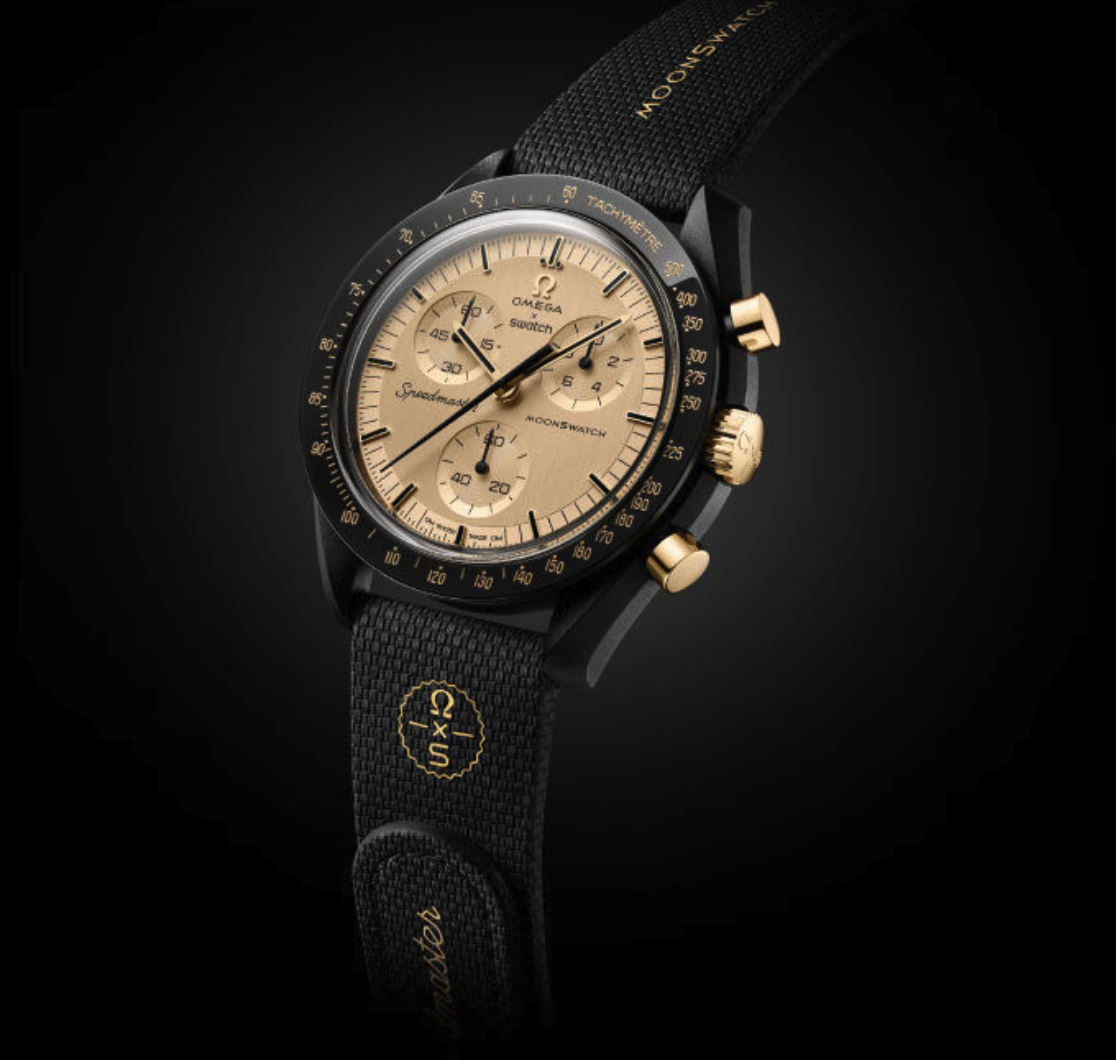
A numbered 1,969-piece MoonSwatch with 11 grams of real 18K Moonshine Gold, priced at 1969 gold rates, gated behind a 32-question application. This one’s built for collectors, not tourists.
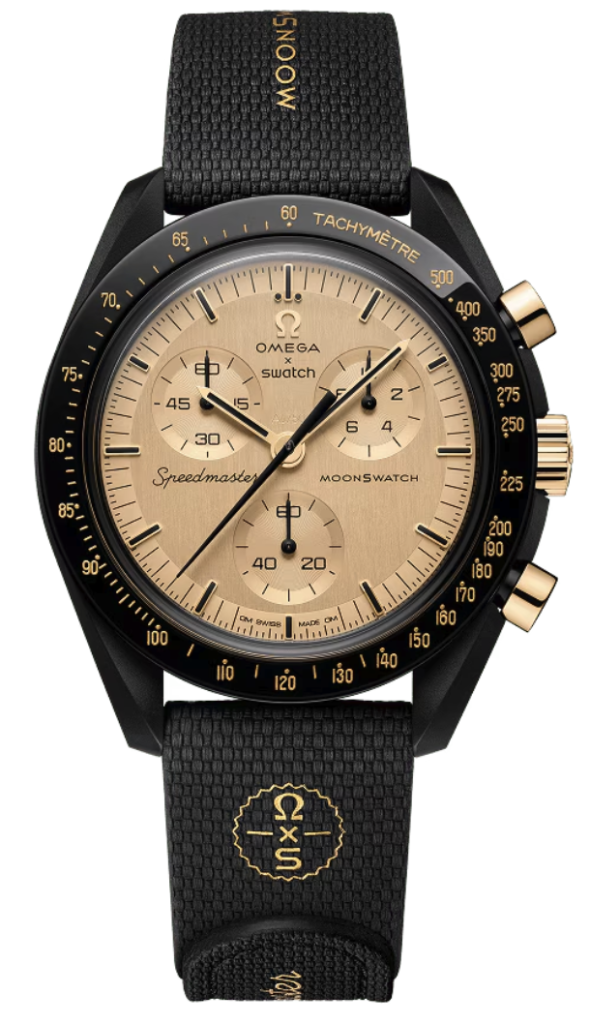
The specs, without the marketing gloss
Swatch dropped this on July 16th. The application window closes on the 21st. Here’s what you’re actually applying for.
The Mission to the Moon 1969 keeps the familiar matte black Bioceramic case and Velcro strap that made the original MoonSwatch a fixture on wrists everywhere. What changes is the metalwork. The dial, hands, crown, and pushers are all cut from OMEGA’s proprietary 18K Moonshine Gold, adding up to 11 grams per watch. That’s not a coincidence. Apollo 11. Every number in this release ties back to July 1969.
The retail sits at roughly $570, which Swatch pegged to the actual per-gram price of gold on July 21, 1969: $1.13. That kind of attention to detail is why collectors chase Swatch drops instead of just buying them.
Only 1,969 pieces exist worldwide, each individually numbered.

What “OM” actually means
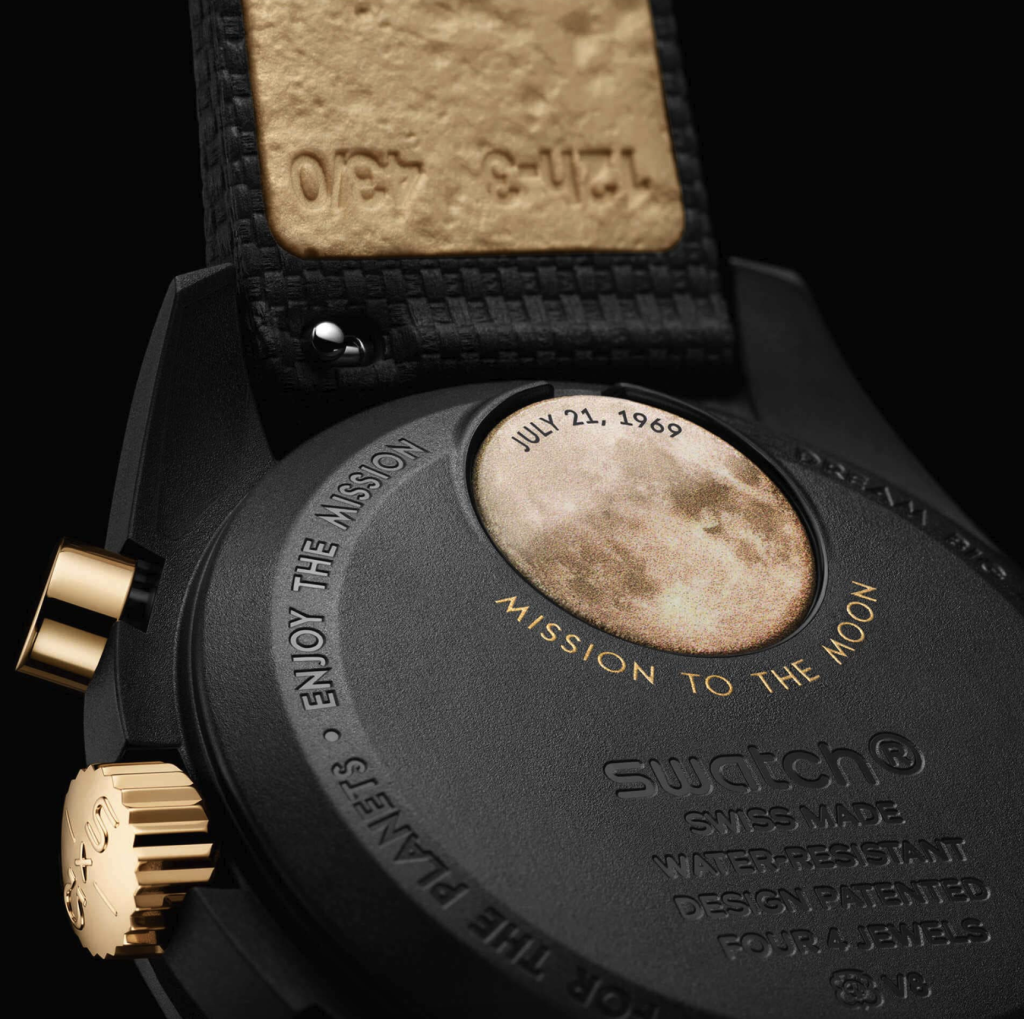
Here’s the thing about Moonshine Gold. OMEGA developed this alloy specifically for the Speedmaster line, and it carries a paler, more silvery cast than traditional yellow gold. The original 1969 Speedmaster BA145.022, presented to the Apollo astronauts at the Houston astronauts’ dinner, used solid gold hardware and carried an “OM” inscription. That marking is French: Or Massif. Solid gold.
The Mission to the Moon 1969 carries the same “OM” stamp. That’s not a marketing decision. That’s Swatch and OMEGA speaking directly to collectors who know what they’re looking at.
Eleven grams isn’t just a spec. It’s a serial number for July 1969, hidden in plain sight on the wrist.
This is a lottery, not a purchase. Swatch built the 32-question application to filter for enthusiasts, not resellers, but the secondary market will move fast regardless. Expect 3x to 5x retail within the first 60 days, then a partial settle-back once the initial hype clears. Long-term hold value depends on whether Swatch runs a follow-up in the series.
The application, decoded
Swatch isn’t letting anyone walk in and buy this one. To be considered, you fill out a 32-question application between July 16th and July 21st. Selected applicants get contacted with purchase instructions. Everyone else gets nothing.
The questions cover Swatch history, watchmaking trivia, and Apollo 11 knowledge. Some are legitimately difficult. If you’re planning to apply, here’s what a handful of the actual answers look like.
What this actually means at $570
The MoonSwatch line has been a masterclass in manufactured demand. First-gen models moved for 3x retail on release day. This release has real gold, tighter production numbers, and a story that ties directly to the most iconic moment in horological marketing history: Apollo 11 on the Moon.
Downside is honest. It’s still a quartz Bioceramic Swatch at its core. Long-term value depends on collector sentiment, not mechanical merit. If the Swatch novelty fades in five years, the gold content becomes a value floor but not a ceiling.
Upside: if you land one, you’re holding a numbered piece with a documented backstory and real precious metal content. That’s a rare combination at $570.
Swatch is running the luxury Swiss playbook: build the scarcity, gate the access, let the market decide the value.
Common questions about the MoonSwatch 1969
Swatch opened applications on July 16, 2026, running through July 21. Applicants complete a 32-question form on Swatch’s official page. Selected participants are contacted directly with purchase instructions.
11 grams of 18K Moonshine Gold, distributed across the dial, hands, crown, and pushers. Moonshine Gold is OMEGA’s proprietary alloy, originally developed for the modern Speedmaster line.
Swatch pegged the retail price to the per-gram gold price on July 21, 1969, the day of the Apollo 11 lunar landing. Gold traded at $1.13 per gram that day. Multiply by the 11 grams of Moonshine Gold in the watch, add the case and movement, and $570 lands close to the math.
Or Massif. French for solid gold. The original 1969 OMEGA Speedmaster BA145.022 presented to Apollo astronauts carries the same inscription.
1,969 individually numbered pieces worldwide, matching the year of the Apollo 11 mission.
Short-term, expect strong resale activity given the limited run and gold content. Long-term valuation depends on collector sentiment across the broader MoonSwatch line and whether Swatch follows up with additional numbered releases.
Swatch pulled off something interesting here. They took the mass-market MoonSwatch formula, added real gold, wrote a story around Apollo 11, and gated the whole thing behind an application form. Whether that reads as clever marketing or manufactured hype depends on your view of the brand. What isn’t up for debate: 1,969 collectors are going to end up with a legitimately interesting piece for $570, and the rest of us will be watching the secondary market.
If you land one, wear it well.
Apply for the Mission to the Moon 1969 direct from Swatch: swatch.com/mission-to-the-moon-1969