
Stainless steel Rolex sport models – especially the Submariner, Daytona, and the recently discontinued GMT‑Master II “Pepsi”-remain among the strongest-performing luxury watches for 5-10 year holds, with key references trading well above retail and the “big three” (Rolex, Patek Philippe, Audemars Piguet) posting average annual returns around 20% since 2018. For larger budgets, flagship Patek Nautilus and AP Royal Oak steel references command even bigger absolute and percentage premiums, while most fashion-brand and non–top-tier watches generally underperform and often depreciate. The data still support a core strategy: focus on steel sport models from these elite brands, buy at realistic market prices, keep the original box and papers, and plan on a 5–10 year horizon to maximize value retention and upside.
Why Certain Watches Appreciate (And Most Don’t)
Watch prices move on three forces: brand demand, supply control, and cultural staying power. When all three align in a single reference, you get a watch that trades above retail for years or even decades. When even one is missing, you get depreciation.
The brands that consistently produce investment-grade watches have something in common. They make far fewer pieces than the market wants. Rolex produces roughly 1.2 million watches per year across all models, but steel sport references see waitlists that run 12 to 24 months at authorized dealers. Patek Philippe produces only about 70,000 watches annually. Audemars Piguet sits around 60,000. Compare that to the millions of units from fashion watch brands, and the supply picture becomes clear.
You don’t need to be a collector. You just need to understand which specific references have the demand, the scarcity, and the track record to justify their prices.
Rolex, The Blue Chip of Watch Investing
Rolex is the S&P 500 of watches. Safe, predictable, always liquid. You can sell a Submariner anywhere on earth within 24 hours. No other brand comes close to that level of global demand.
But not every Rolex holds value equally. The models that consistently perform are the steel sport references. Here are the ones worth paying attention to in 2026:
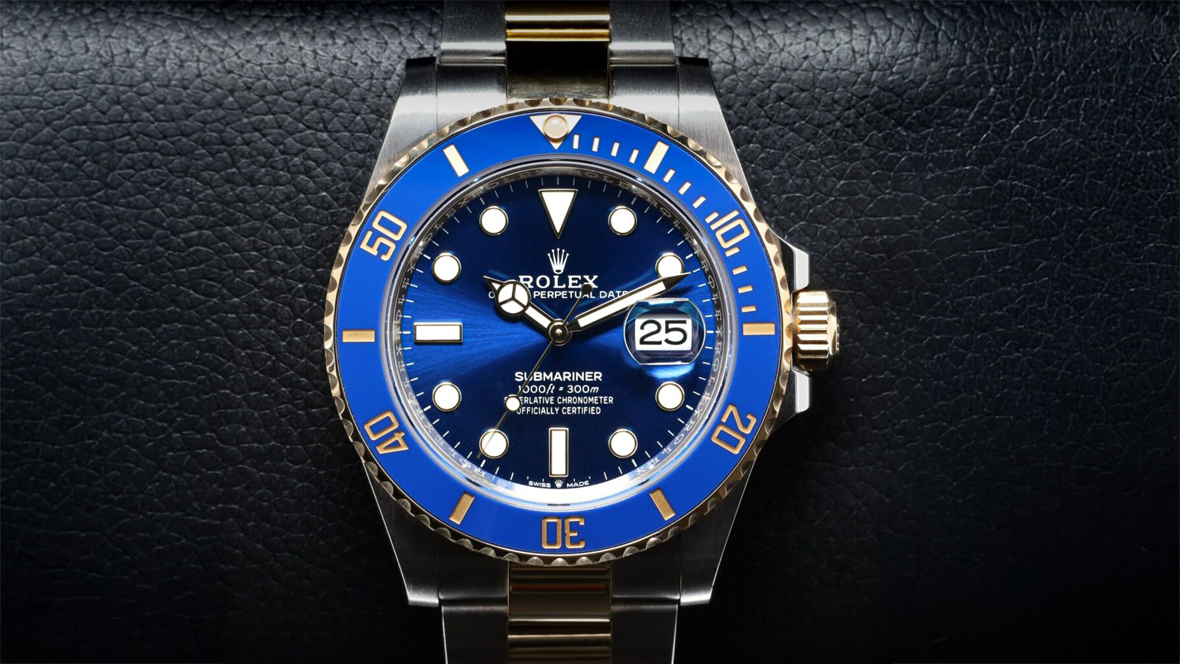
Submariner Date (Ref. 126610LN)
The most recognizable dive watch ever made. The current 41mm reference with Caliber 3235 retails at roughly $10,250 to $11,350 through authorized dealers. On the secondary market, pre-owned full-set examples trade between $13,000 and $14,500, while unworn recent-production pieces push $15,500 to $16,500. That’s a durable 27 to 60 percent premium over retail, sustained by waitlists that run one to two years at most ADs.
The green-bezel “Starbucks” variant (Ref. 126610LV) trades slightly higher, typically $13,000 to $17,000 or more, though the gap between the two has been narrowing.
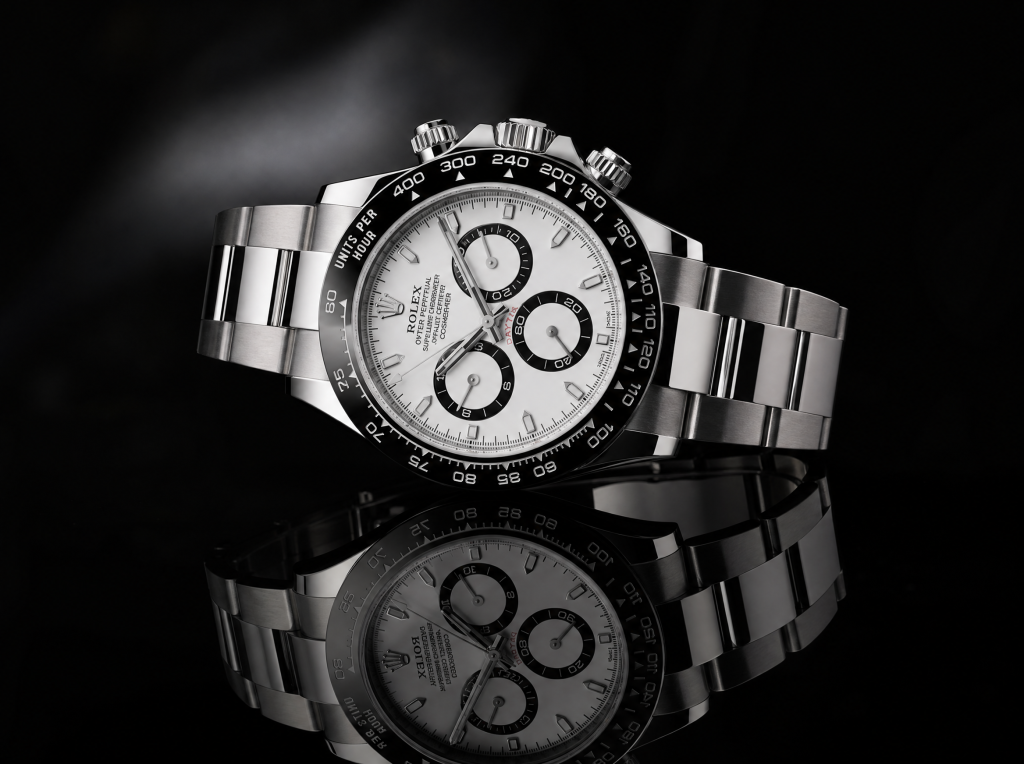
Cosmograph Daytona (Ref. 126500LN)
The Daytona is the crown jewel. Retail sits at approximately $16,900, but good luck getting one at that price. Authorized dealer waitlists stretch years, and most boutiques allocate based on purchase history rather than formal lists.
On the secondary market, the steel 126500LN trades between $32,000 and $38,500, roughly double retail. The white “Panda” dial (Ref. 126500LN-0001) commands about $6,000 more than the black dial variant. This premium has held steady for nearly two years, making it one of the most consistent performers in the entire watch market.
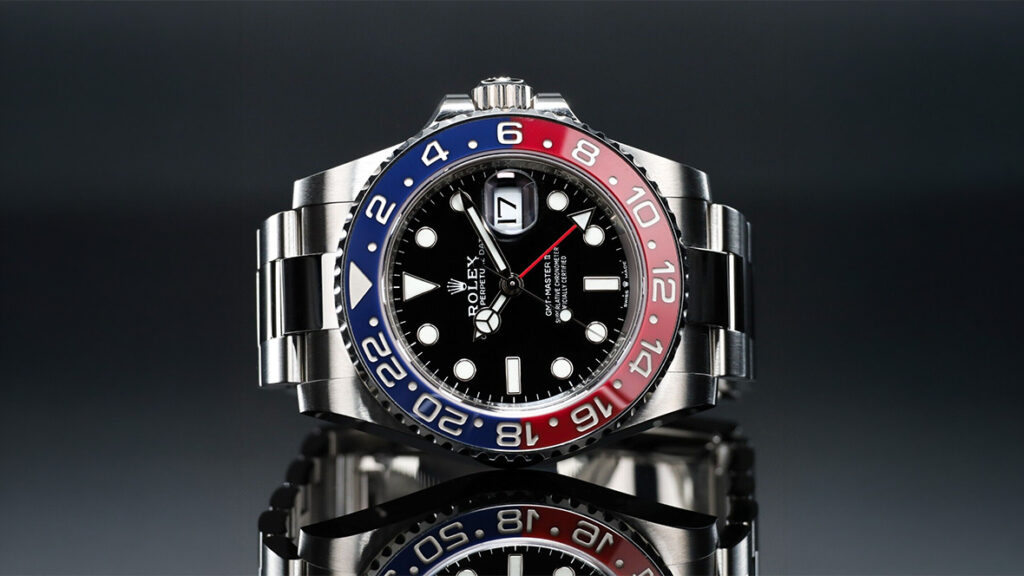
GMT-Master II “Pepsi” (Ref. 126710BLRO)
This is the story of 2026. At Watches & Wonders Geneva in April, Rolex quietly removed the Pepsi from its catalog without announcing a replacement. The red-and-blue Cerachrom bezel GMT-Master II is no longer in production.
The market responded within hours. Pre-discontinuation, the 126710BLRO traded around $18,000 to $22,000. After the announcement, prices surged to $25,000 to $34,000 for pre-owned examples, with unworn 2026-dated pieces pushing past $40,000. The Jubilee bracelet version carries roughly a 5% premium over the Oyster. If the discontinued Submariner “Hulk” (Ref. 116610LV) is any guide, expect continued appreciation.
“The best Rolex investment is the one you buy at the right price, keep complete, and hold long enough for scarcity to do its work. That hasn’t changed in 30 years.”
Patek Philippe, The Generational Play
Patek Philippe is “old money” territory. Production is tiny. Demand is generational. And the numbers tell a story that no other watchmaker can match.
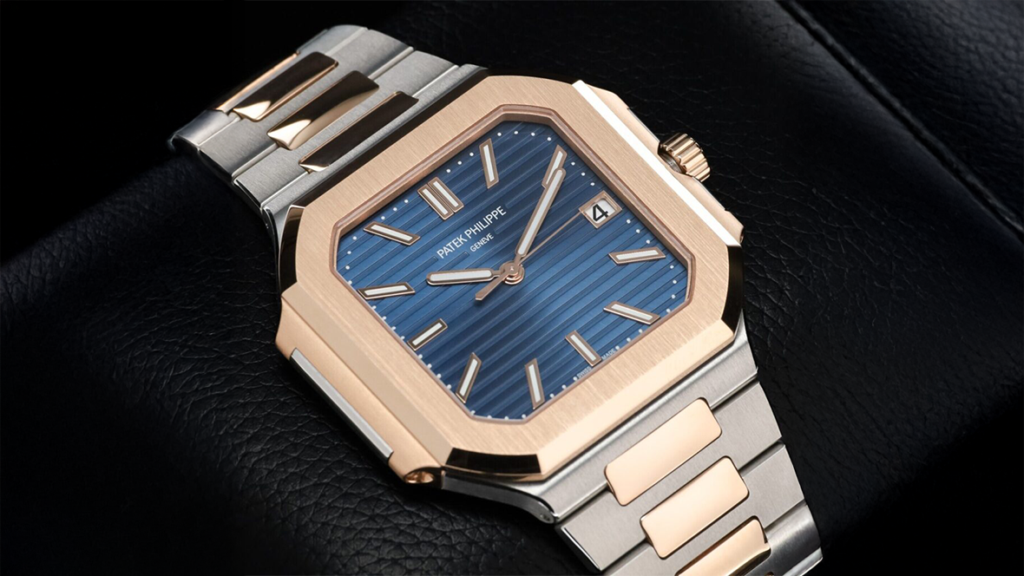
Nautilus 5711/1A (Discontinued)
The single most sought-after watch in the world by most measures. Patek discontinued the steel 5711/1A in January 2021, permanently capping supply. The last retail price was roughly $34,900. Today, clean full-set examples on the secondary market trade between $95,000 and $160,000 depending on dial variant and condition. The blue dial (5711/1A-010) currently sits around $95,000 to $112,000 after settling from a 2022 peak well above $130,000. The olive green dial (5711/1A-014) commands $90,000 to $115,000 or more.
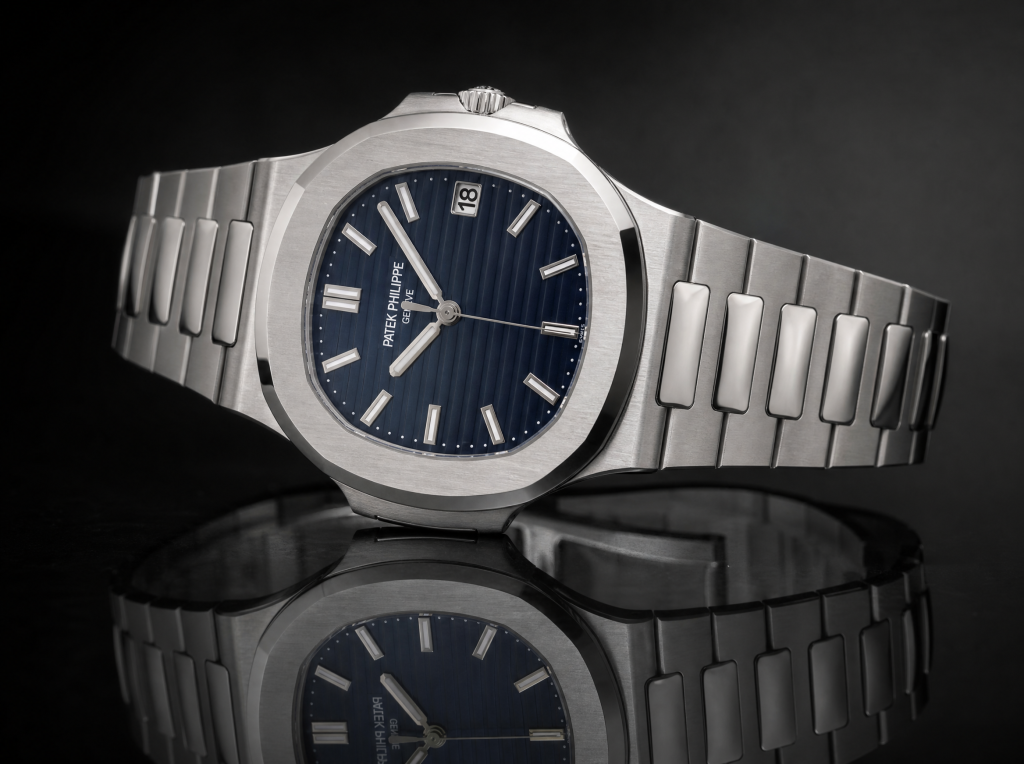
Nautilus 5811/1G (Current Production)
The 5711’s successor, now in white gold instead of steel. Retail sits around $89,767, but secondary market prices hover near $150,000, a premium of roughly 1.7x over retail. Patek’s president Thierry Stern has stated publicly that there will be no steel 5811, making the white gold version the only path to a new-generation Nautilus. The 50th anniversary of the Nautilus collection falls in 2026, which could bring a commemorative release and renewed attention to the entire lineup.
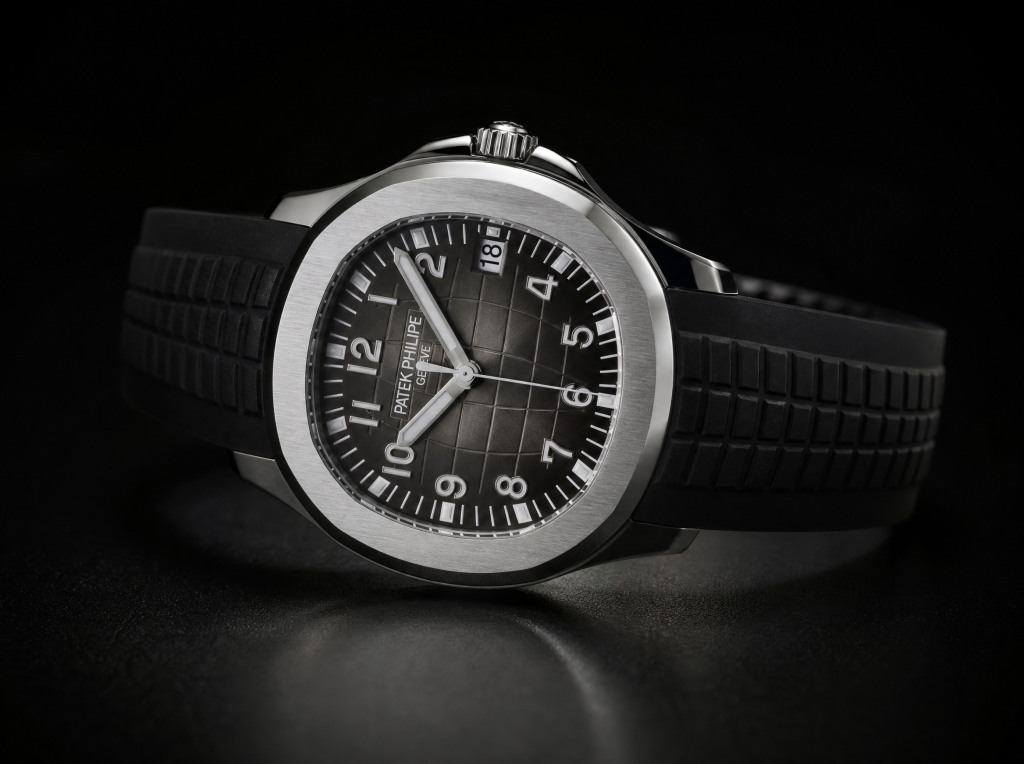
Aquanaut 5167A (Discontinued)
Often called the “entry-level Nautilus,” the 5167A in steel has followed a similar trajectory since discontinuation. It remains one of the strongest performers in the Patek lineup on the secondary market, with examples trading at substantial premiums over its last retail price. For buyers who want Patek DNA and proven appreciation potential without six-figure entry, the Aquanaut deserves serious consideration.
Audemars Piguet – The Quiet Powerhouse
The Royal Oak created the luxury sports watch category in 1972. Gerald Genta designed it, half the AP board rejected it, and it went on to become the benchmark every integrated-bracelet watch is still measured against. In 2026, its relevance is stronger than ever.
AP produces roughly 60,000 watches per year, about a quarter of Rolex’s output. That extreme supply constraint, combined with the brand’s move toward direct-to-consumer boutiques and away from third-party dealers, has kept secondary market premiums high.
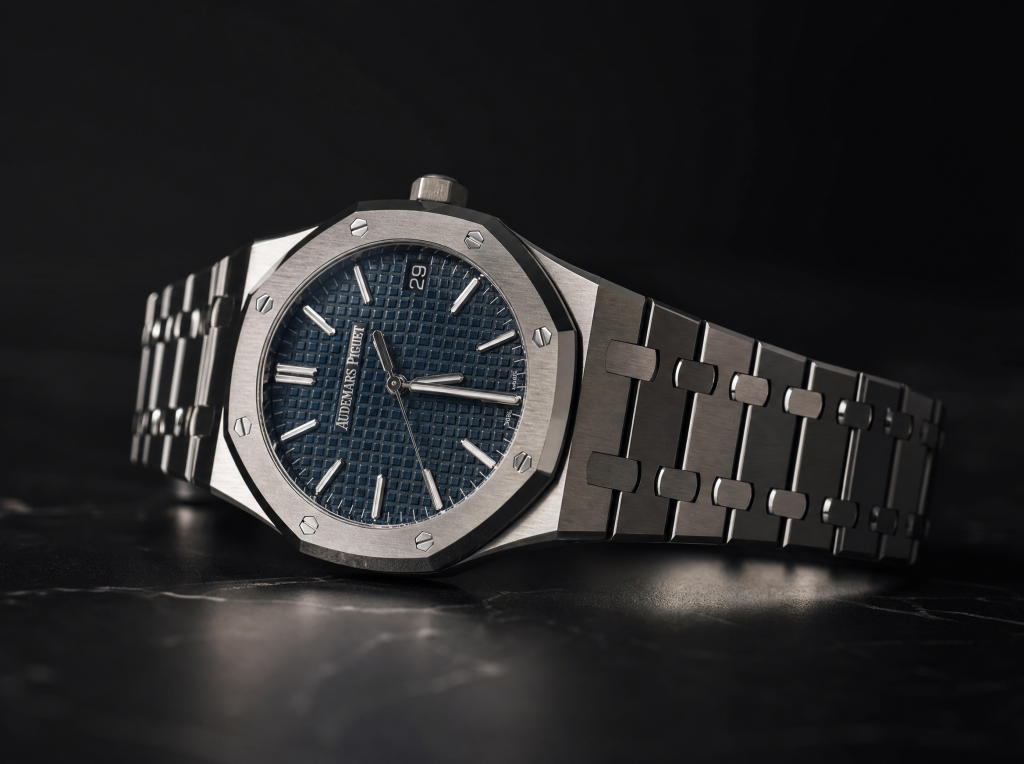
Royal Oak Selfwinding 41mm (Ref. 15510ST / 15500ST)
The 15510ST is the current-production Royal Oak in steel, running the in-house Caliber 4302 with an edge-to-edge Grande Tapisserie dial. Secondary market prices sit between $38,000 and $50,000. Its predecessor, the discontinued 15500ST, now trades between $35,000 and $42,000 and has shown steady 6 to 7 percent year-over-year appreciation. Both hold value well, but the discontinued 15500ST offers a potentially lower entry point with established demand.
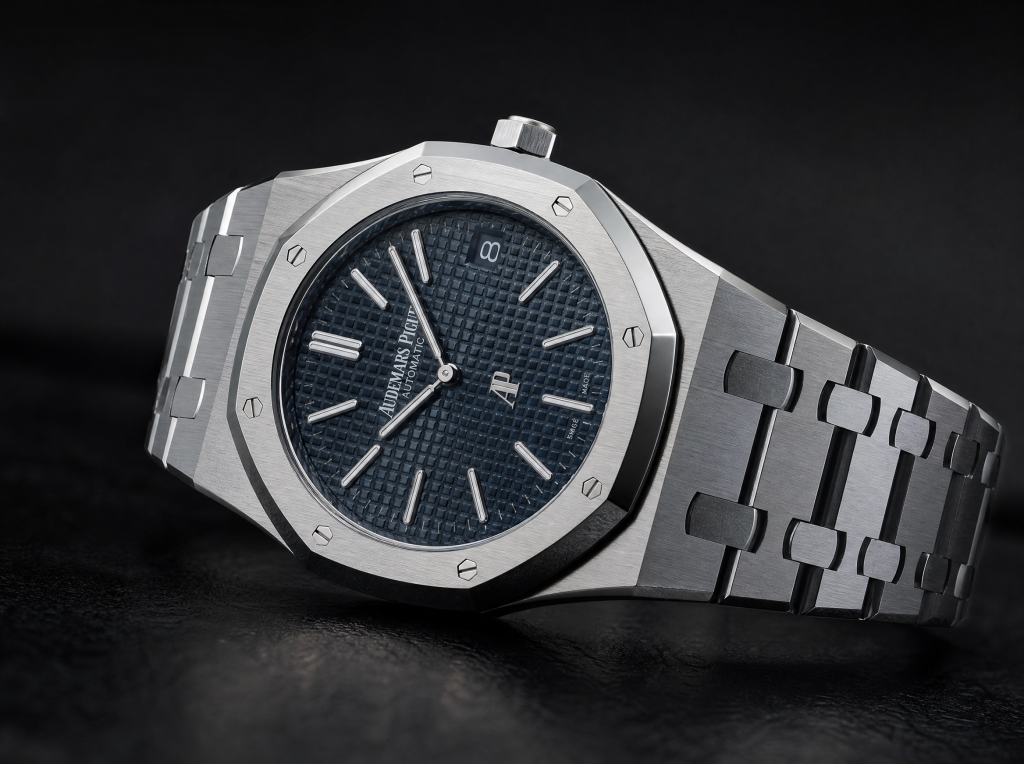
Royal Oak “Jumbo” Extra-Thin (Ref. 16202ST)
The purist’s choice. The Jumbo is the most design-heritage-correct Royal Oak in the current lineup, closest in spirit to Genta’s original 1972 vision. Retail is $40,100. On the secondary market, steel examples trade between $70,000 and $85,000, a premium that reflects both the watch’s historical significance and its extremely limited allocation at boutiques. AP collectors tend not to sell, and that alone keeps prices elevated.
2026 Investment Watch Snapshot:
Secondary Market Overview — Mid‑2026 (Updated)
Rolex
Rolex Submariner Date 126610LN
Retail: ~$10,250–$11,350 (2026 MSRP varies by source/date) | Secondary: $13,000–$16,500 | Premium: ~27–60% palazzowatches
Rolex Cosmograph Daytona 126500LN (Panda)
Retail: ~$16,900 | Secondary: $30,000–$40,000 (Panda dial typically at the higher end) | Premium: ~78–136% watchcollectinglifestyle+2
Rolex GMT‑Master II “Pepsi” 126710BLRO
Discontinued: Early 2026 (phased out late 2025 / confirmed 2026) | Secondary: $22,500–$40,000+ (newer/unworn examples can reach the high end) | Trend: Surging post‑discontinuation
Patek Philippe
Patek Philippe Nautilus 5711/1A (steel)
Discontinued: 2021–2022 | Secondary: $90,000–$160,000+ (dial variant and set completeness drive the spread) | vs. last retail (~$34,890): ~2.6–4.6× bobswatches+1
Patek Philippe Nautilus 5811/1G (white gold)
Retail: ~$89,767 | Secondary: ~$150,000 | Premium: ~67%
Audemars Piguet
Audemars Piguet Royal Oak 15500ST (steel, 41 mm)
Discontinued: 2022 (replaced by 15510) | Secondary: ~$39,500–$52,000 (pre‑owned estimates cluster near $41k; some datasets show higher) | vs. last retail (~$27,800–$28,000): ~40–86%+
Audemars Piguet Royal Oak “Jumbo” Extra‑Thin 16202ST
Retail: $40,100 | Secondary: $70,000–$85,000 (pristine examples) | Premium: ~75–112%
Watches Worth Knowing About
We specialize in Rolex, Patek Philippe, and Audemars Piguet because those three brands have the strongest, most consistent track records for value retention. But two other names deserve a mention for buyers exploring the broader market.
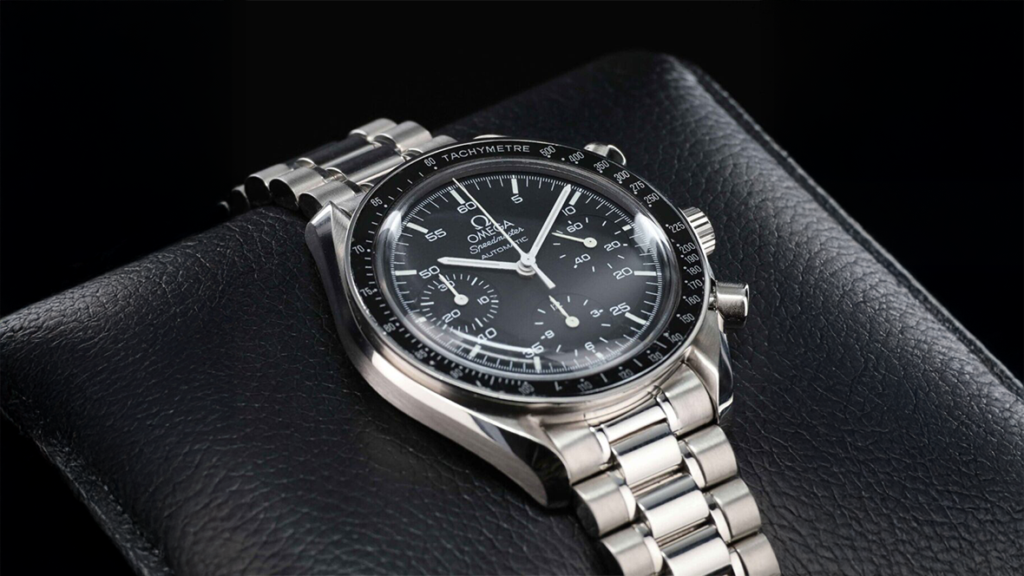
Omega Speedmaster Professional. The “Moonwatch” trades at a slight premium to its roughly $6,900 retail, typically 5 to 15 percent above for pristine complete-set examples. It’s not a speculative play, but it’s a watch where you lose almost nothing over years of ownership. NASA heritage, a hand-wind mechanical movement, and global name recognition keep demand steady. Complete sets matter especially here.
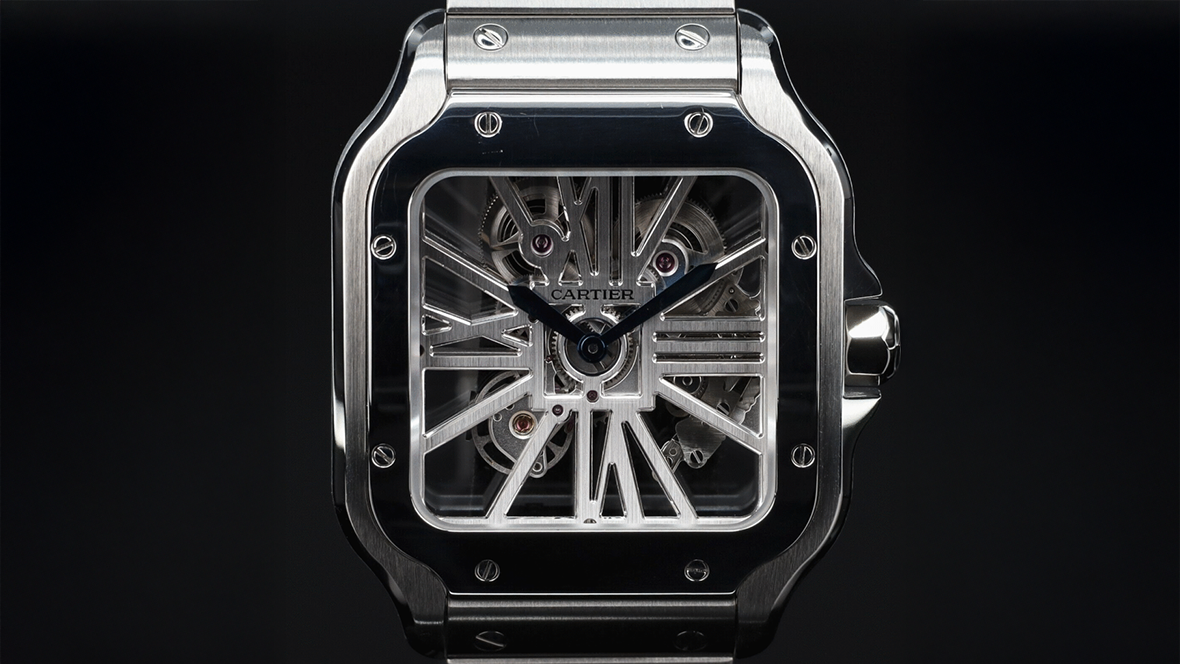
Cartier Tank and Santos. Cartier isn’t hype-driven. These designs age like wine. The Santos in steel has been strengthening on the secondary market, and vintage Tank models have started attracting serious collector attention. Slow, steady, reliable. Not the kind of watches you flip, but the kind you hold for a decade and come out ahead.
How to Choose a Watch That Actually Holds Value
Here’s the stuff nobody tells you until after you’ve made a mistake.
Go for steel. Stainless steel sport references hold value better than precious metal variants in almost every case. Steel Rolex and AP watches have the deepest liquidity and broadest buyer pools.
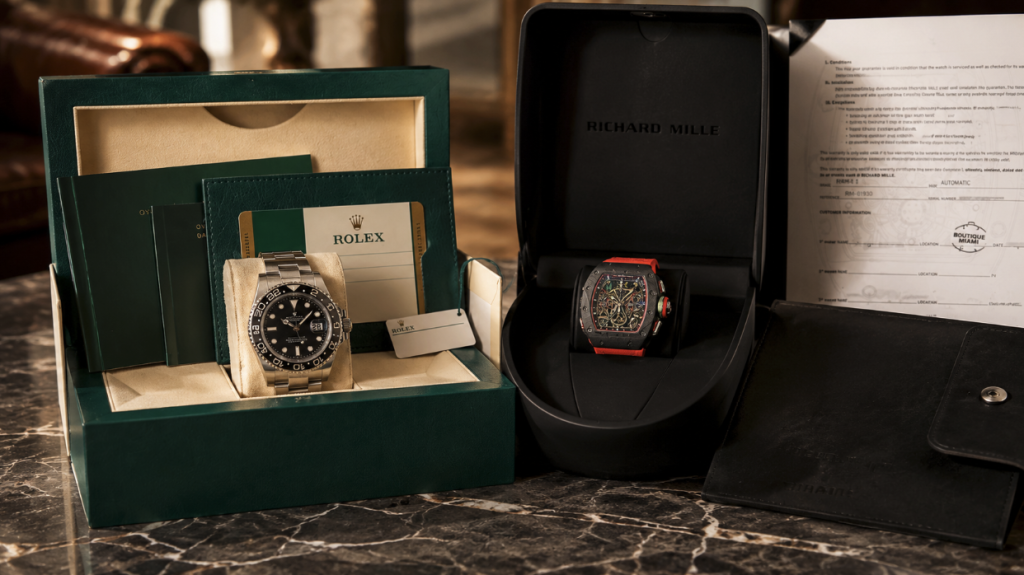
Keep the box, papers, and warranty card. Complete sets sell for 10 to 20 percent more than watch-only examples. Papers prove authenticity, document provenance, and give buyers confidence. This is your “portfolio management.”
Condition is everything. A watch that’s been polished too many times loses case definition, and that tanks the value. Collectors pay premiums for sharp lugs and original finishing. Buy clean, keep clean.
Stick to icons. Not “special editions.” Not “limited collaborations.” Real icons with decades of proven demand. The Submariner, the Daytona, the Nautilus, the Royal Oak. These models have survived market corrections, fashion cycles, and generational shifts. Limited editions can look exciting on day one and crater by year three.
Buy pre-owned. You skip the retail depreciation hit, you see what the watch is actually worth on the open market, and you can access discontinued references that command higher premiums. No waitlists, no purchase history games. Just make sure you buy from a dealer who guarantees authenticity and provides full documentation.
How to Choose a Watch That Actually Holds Value
Here’s the stuff nobody tells you until after you’ve made a mistake.
Go for steel. Stainless steel sport references hold value better than precious metal variants in almost every case. Steel Rolex and AP watches have the deepest liquidity and broadest buyer pools.
Keep the box, papers, and warranty card. Complete sets sell for 10 to 20 percent more than watch-only examples. Papers prove authenticity, document provenance, and give buyers confidence. This is your “portfolio management.”
Condition is everything. A watch that’s been polished too many times loses case definition, and that tanks the value. Collectors pay premiums for sharp lugs and original finishing. Buy clean, keep clean.
Stick to icons. Not “special editions.” Not “limited collaborations.” Real icons with decades of proven demand. The Submariner, the Daytona, the Nautilus, the Royal Oak. These models have survived market corrections, fashion cycles, and generational shifts. Limited editions can look exciting on day one and crater by year three.
Buy pre-owned. You skip the retail depreciation hit, you see what the watch is actually worth on the open market, and you can access discontinued references that command higher premiums. No waitlists, no purchase history games. Just make sure you buy from a dealer who guarantees authenticity and provides full documentation.
Brands and Moves That Lose Money
Not every luxury badge holds value. In fact, some lose money the moment you walk out of the store.
Fashion-brand watches: steep, front-loaded depreciation
- Watches from fashion houses (Gucci, Versace, Michael Kors, Emporio Armani, etc.) typically depreciate 40–80% from retail, often within the first couple of years, especially quartz “style-first” pieces.
- These brands’ core businesses are apparel, handbags, and fragrance; their watches are generally licensed lifestyle products, not collector-grade timepieces. If the brand’s identity isn’t built around watchmaking, treat the watch as purely a fashion purchase, not an asset.
Respected watch brands that underperform as investments
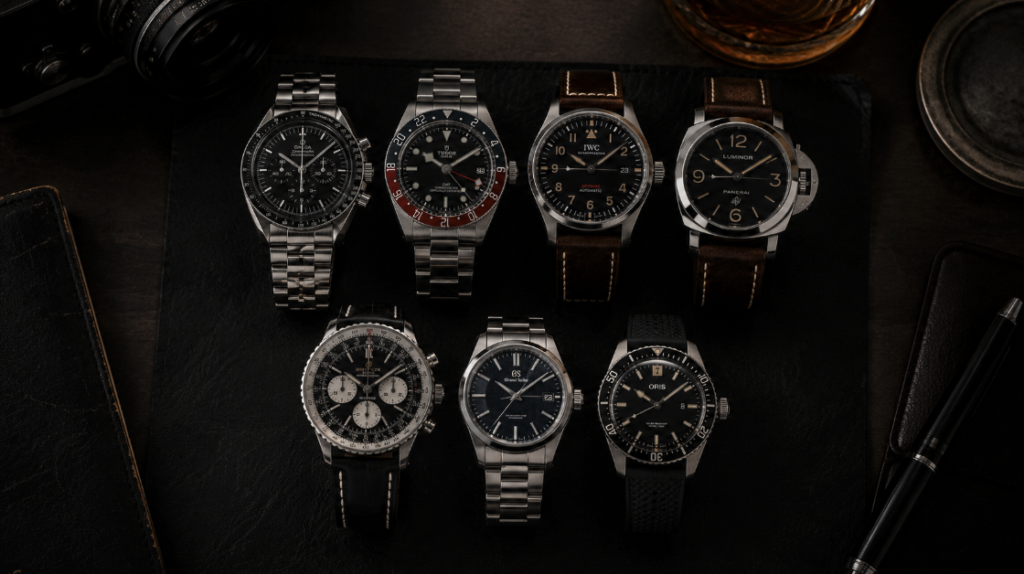
- Panerai, Breitling, TAG Heuer, and Hublot make solid watches, but the secondary market rarely rewards them like top-tier sports models. Most non-limited references trade 20–60% below retail after the first few years, with high production volumes and dealer discounts keeping resale soft.
- Hublot in particular is known for weak resale outside of select limited or high-profile Big Bang pieces.
- IWC sits in the middle: many models depreciate from MSRP, especially when bought new, though some references (certain Big Pilots, limited editions, or hyped Ingenieur cycles) can hold value better or even appreciate for periods. Overall, treat IWC as a quality wearer first, with value retention as a secondary consideration.
Watches vs your investment portfolio
- Watches should not replace core retirement assets. Even “hot” models can see sharp drawdowns after peaks, and the market is illiquid and model-specific.marinerwealthadvisors+1
- A sensible view: keep watches as a small, passion-driven slice of a diversified strategy, not the foundation of your 401(k). The real edge over stocks and bonds is simple — you get to wear and enjoy the asset while it holds or appreciates, rather than watching a line on a screen
What Most People Get Wrong
Here’s what most people get wrong about watch investing: they chase hype instead of fundamentals. They buy what’s trending on Instagram and TikTok instead of what actually holds value over decades.
The watches that perform best aren’t always the ones with the flashiest marketing. They’re the ones with proven demand, controlled supply, and timeless design. A steel Rolex Submariner. A Patek Nautilus. An AP Royal Oak. These references have held their ground through booms, corrections, and everything in between.
And the best watch investment is one you actually enjoy wearing. Because if the market shifts and your watch doesn’t appreciate the way you hoped, at least you got to wear something incredible every day.
Ready to Start Your Watch Investment Portfolio?
Stop guessing which watches will hold value. Browse our curated collection of investment-grade timepieces from Rolex, Patek Philippe, Audemars Piguet, and more—every watch authenticated, every listing transparent, every price fair.
Shop Investment Watches at The Watch Connect
Authenticated pieces • Proven track records • Expert guidance on what actually appreciates
Watch Investing in 2026 FAQ
Do luxury watches appreciate in value?
Some do, most don’t. Watches from Rolex, Patek Philippe, and Audemars Piguet have the strongest track record, especially steel sport models like the Submariner, Nautilus, and Royal Oak. But appreciation isn’t guaranteed. You need to buy the right references, keep the watch complete with box and papers, maintain its condition, and hold for the right amount of time. The icons with decades of demand behind them are the ones that consistently perform.
What’s the best watch for investment in 2026?
For the broadest combination of liquidity, demand, and value retention, Rolex steel sport models remain the safest bet. The Submariner 126610LN and Daytona 126500LN trade at consistent premiums over retail. The recently discontinued GMT-Master II Pepsi (126710BLRO) is showing strong post-discontinuation momentum. For higher-end buyers, the Patek Philippe Nautilus 5711/1A and AP Royal Oak 16202ST both carry significant premiums and have deep collector demand.
Should I buy new or pre-owned for investment purposes?
Pre-owned is the smarter entry point for investment. You skip the initial retail-to-secondary depreciation, you see the watch’s actual market value rather than a theoretical retail price, and you can access discontinued references that often command higher premiums. No waitlists, no purchase history requirements. Just make sure you buy from a reputable grey market dealer who guarantees authenticity and provides full paperwork.
How long should I hold a watch before selling?
Five to ten years minimum if you want meaningful appreciation. The quick-flip era has cooled significantly since the 2022 market correction. Watches work best as investments when you hold them long enough for scarcity and brand power to compound. Think of them like real estate. Patient holders who bought Rolex sport models five or more years ago are sitting on significant gains today.
Does keeping the box and papers really matter?
Yes. Complete sets with box, papers, and warranty card sell for 10 to 20 percent more than watch-only examples across every major brand. Documentation proves authenticity, establishes provenance, and gives buyers confidence. If you’re buying a watch with any investment intent, keep everything that came with it. It’s the difference between a smooth sale and leaving thousands on the table.
Which watch brands should I avoid for investment?
Fashion brands (Gucci, Versace, Michael Kors) lose 50 to 70 percent of their value on the secondary market. Among dedicated watchmakers, Panerai, Breitling, TAG Heuer, and Hublot make quality timepieces but typically depreciate 30 to 60 percent from retail. The secondary market concentrates its premiums heavily around Rolex, Patek Philippe, and Audemars Piguet. Stick with what the market consistently rewards.
Related Resources:
- Browse Investment-Grade Rolex Watches
- Explore Patek Philippe Collection
- Shop Audemars Piguet
- View Omega Speedmaster Watches
- Discover Cartier Classics
About The Watch Connect
Michael Martin, VP of sales for The Watch Connect, brings in depth luxury sales experience to the grey market watch space. We specialize in helping buyers navigate investment-grade timepieces from Rolex, Patek Philippe, and Audemars Piguet with transparent pricing, authentication guarantees, and honest guidance on what actually holds value. No hype, no pressure-just real talk about watches that perform.
Last updated: July 2026 | This comprehensive guide to the best watches for investment covers proven models from Rolex, Patek Philippe, Audemars Piguet, Omega, and Cartier that consistently hold value in the secondary market. Learn which luxury watches appreciate, what to avoid, and how to build a watch collection that performs.