TL;DR Before buying a luxury watch, set a realistic budget including future service costs, choose a style that matches your lifestyle, and verify authenticity through a trusted seller. Pay attention to size, movement quality, and materials to ensure comfort and longevity. Understanding these fundamentals and resale value will help you avoid common first-time buyer mistakes and make a confident purchase.
If you handle those five points properly, you will avoid most mistakes first-time buyers make. Everything else in this guide helps you understand why those steps matter and how to approach them with confidence.
Table of Contents
- Start Here If This Is Your First Luxury Watch
- What Actually Makes a Watch “Luxury”
- Mechanical vs Quartz: What You Should Know
- Why People Buy Luxury Watches
- Why Luxury Watches Cost What They Do
- Understanding Different Types of Luxury Watches
- Getting the Size Right
- Materials and What They Feel Like
- Water Resistance Explained Simply
- Choosing a Watch That Fits Your Life
- Buying New vs Buying Pre-Owned
- Where to Buy a Luxury Watch Safely
- Avoiding Fakes and Modified Watches
- Budgeting Beyond the Sticker Price
- Brands Worth Knowing
- Watches Almost Everyone Recognizes
- Working With Authorized Dealers
- Service and Long-Term Ownership
- Common First-Time Buyer Mistakes
- Are Luxury Watches Good Investments?
- Final Checklist Before You Buy
- Final Thoughts
Start Here If This Is Your First Time Buying a Luxury Watch
Buying a luxury watch is not like buying most other things. You are not just paying for function. You are paying for build quality, long-term ownership, and something you will likely wear for years.
That can make the process feel intimidating. Prices are high. Opinions online are loud. Some people talk only about resale value. Others talk only about brand history. Very few explain how all of this applies to someone buying their first serious watch.
This guide is meant to cut through that noise. It is written for people who want to make a smart purchase, enjoy wearing the watch, and not regret the decision later.
You do not need to be an expert. You just need the right framework.
What Actually Makes a Watch “Luxury”
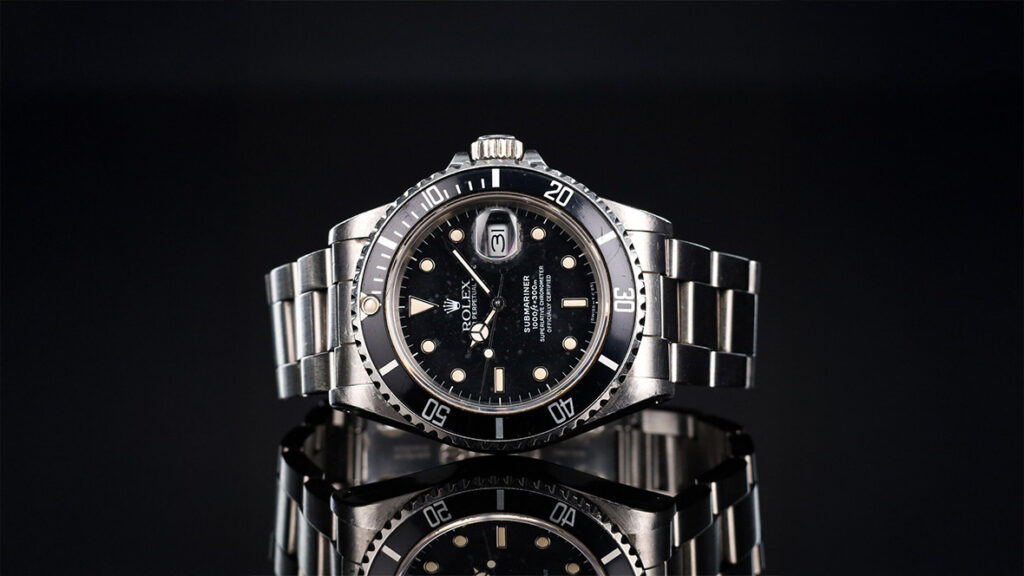
A luxury watch is not defined by price alone. Plenty of expensive watches are not especially well made, and some reasonably priced watches punch far above their weight.
At its core, a luxury watch is built with the expectation that it will be worn, serviced, and kept for a long time.
That usually means a few things.
First, the movement is mechanical. Mechanical movements use springs, gears, and rotating parts instead of batteries. They are more complex, require maintenance, and can be repaired decades later if parts are available.
Second, the materials are chosen for durability. Cases are typically steel, gold, platinum, or titanium. Crystals are sapphire, not mineral glass. Bracelets and clasps are solid, not stamped.
Third, the brand supports long-term service. A luxury watch should be able to go back to the manufacturer or a qualified watchmaker years later and still be serviceable.
If a watch cannot reasonably meet those standards, most collectors would not consider it truly luxury.
Mechanical vs Quartz: What You Should Know
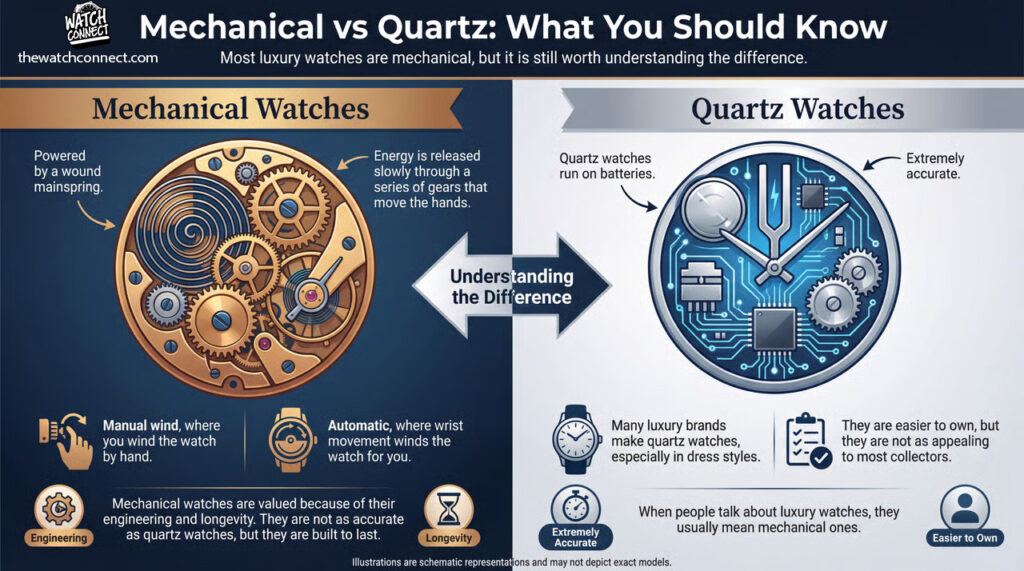
Most luxury watches are mechanical, but it is still worth understanding the difference.
Mechanical Watches
Mechanical watches are powered by a wound mainspring. That energy is released slowly through a series of gears that move the hands.
They can be:
-
Manual wind, where you wind the watch by hand
-
Automatic, where wrist movement winds the watch for you
Mechanical watches are valued because of their engineering and longevity. They are not as accurate as quartz watches, but they are built to last.
Quartz Watches
Quartz watches run on batteries and are extremely accurate. Many luxury brands make quartz watches, especially in dress styles.
They are easier to own, but they are not as appealing to most collectors. When people talk about luxury watches, they usually mean mechanical ones.

Why People Buy Luxury Watches
There is no single right reason to buy a luxury watch. Problems usually start when buyers convince themselves they are buying for one reason but act on another.
Here are the most common motivations.
Personal Style
A watch is often the only accessory worn every day. It plays a big role in how your overall style comes across.
A well-chosen watch looks natural with what you wear. A poorly chosen one feels forced.
Long-Term Ownership
Many people like the idea of owning something that lasts. A good watch can be worn for decades with routine service.
Some buyers choose watches with the intention of passing them down. Others just like knowing the watch is built to outlast trends.
Value Retention
Some watches hold their value well. A few increase in price over time. Most do not.
Buying a watch purely as an investment is risky unless you really know the market. Buying a watch you enjoy wearing is usually the safer move.
Why Luxury Watches Cost What They Do
Luxury watches are expensive for a few main reasons.
Movement Development
Designing a mechanical movement is expensive. Even movements that look simple involve hundreds of parts and tight tolerances.
Brands that make their own movements invest heavily in research, testing, and manufacturing.
Labor and Assembly
Many components are assembled and adjusted by hand. Even with modern tools, this work takes time and skill.
Production Limits
Some brands limit how many watches they make each year. Demand often exceeds supply, especially for popular models. That keeps prices high, particularly on the secondary market.
Understanding Different Types of Luxury Watches
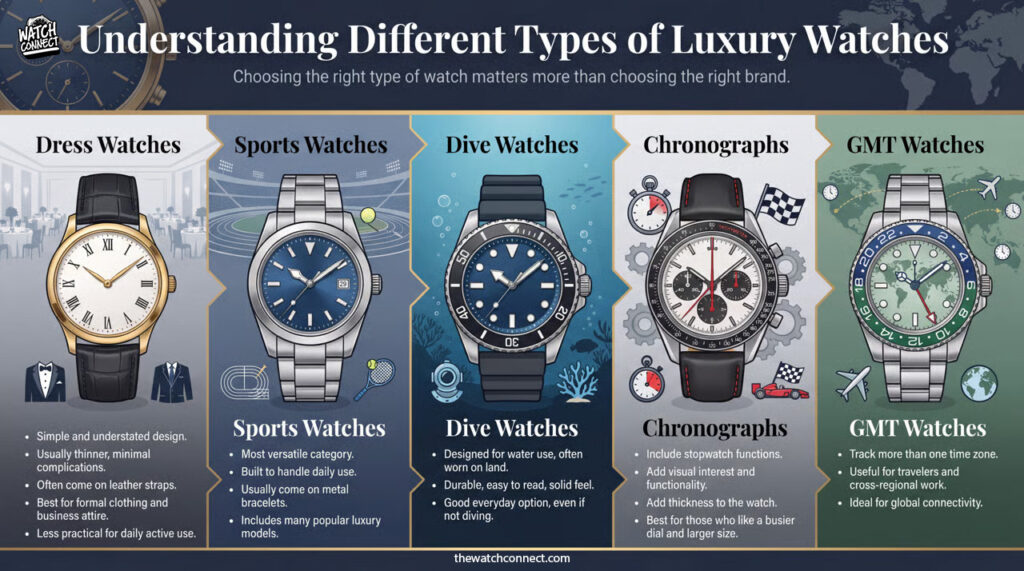
Choosing the right type of watch matters more than choosing the right brand.
Dress Watches
Dress watches are simple and understated. They are usually thinner, with minimal complications, and often come on leather straps.
Most work best with formal clothing and business attire. They are less practical for daily wear if you live an active lifestyle.
Sports Watches
Sports watches are the most versatile category. They are built to handle daily use and usually come on metal bracelets.
This category includes many of the most popular luxury watches on the market.
Dive Watches
Dive watches are designed for water use, but most are worn on land. They are durable, easy to read, and tend to feel solid on the wrist.
Even if you never dive, a dive watch can be a good everyday option.
Chronographs
Chronographs include stopwatch functions. They add visual interest and functionality, but they also add thickness.
They are best if you like a busier dial and do not mind a larger watch.
GMT Watches
GMT watches track more than one time zone. They are useful for travelers and anyone who works across different regions.
Getting the Size Right
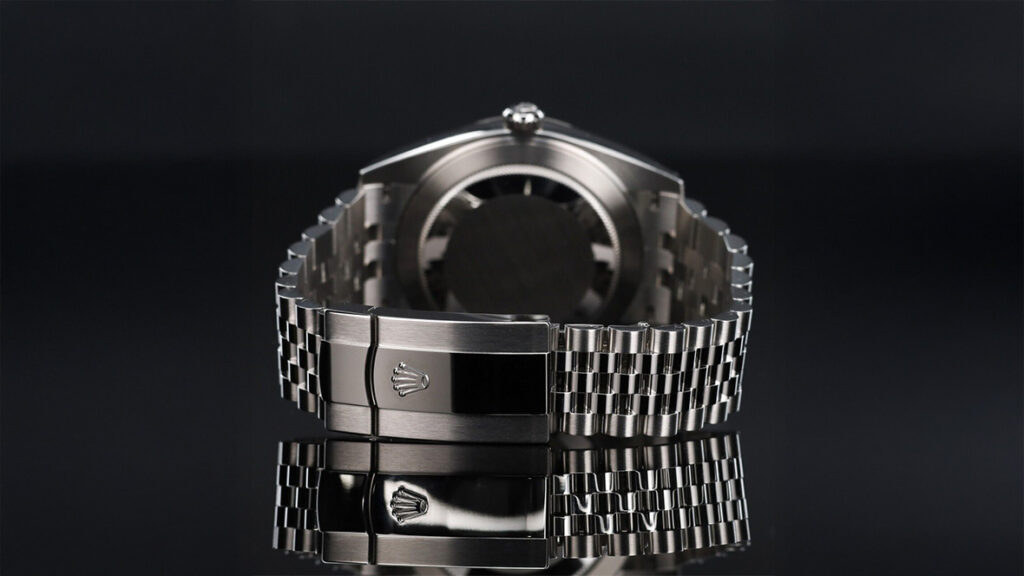
Size is one of the most common mistakes new buyers make.
A watch can look great in photos and feel completely wrong on your wrist.
Case Diameter
-
36 to 40mm works for most wrists and styles
-
41 to 42mm looks sportier and wears larger
-
Anything bigger can feel bulky unless your wrist is large
Thickness
Thickness matters as much as width. A thick watch can catch on cuffs and feel awkward, even if the diameter is reasonable.
Lug-to-Lug Length
This is how far the watch extends across your wrist. If it is too long, the watch will overhang and feel uncomfortable.
Try the watch on before buying. If not, compare measurements to watches you already own.
Materials and What They Feel Like
Materials affect both comfort and appearance.
Steel
Steel is the most common and practical option. It is durable, relatively affordable, and easy to maintain.
Gold
Gold watches feel heavier and more formal. They scratch more easily and are better suited for dress or occasional wear.
Titanium
Titanium is light and comfortable. It is great for people who dislike heavy watches.
Ceramic
Ceramic resists scratches but can crack if hit hard. It has a distinct look that not everyone likes.
Water Resistance Explained Simply
Water resistance ratings confuse many buyers.
-
30 meters means splashes and rain
-
50 meters is fine for light water exposure
-
100 meters is safe for swimming
-
300 meters and above is designed for diving
If you want a watch you never have to worry about near water, aim for at least 100 meters.
Choosing a Watch That Fits Your Life
Before buying a luxury watch, take an honest look at how you live.
Ask yourself:
-
Will I wear this to work?
-
Does it fit my usual clothing?
-
Will I feel comfortable wearing it often?
Many buyers choose watches they admire but never wear. That usually leads to regret.
A simpler watch that gets worn regularly is better than an impressive one that stays in a box.
Buying New vs Buying Pre-Owned
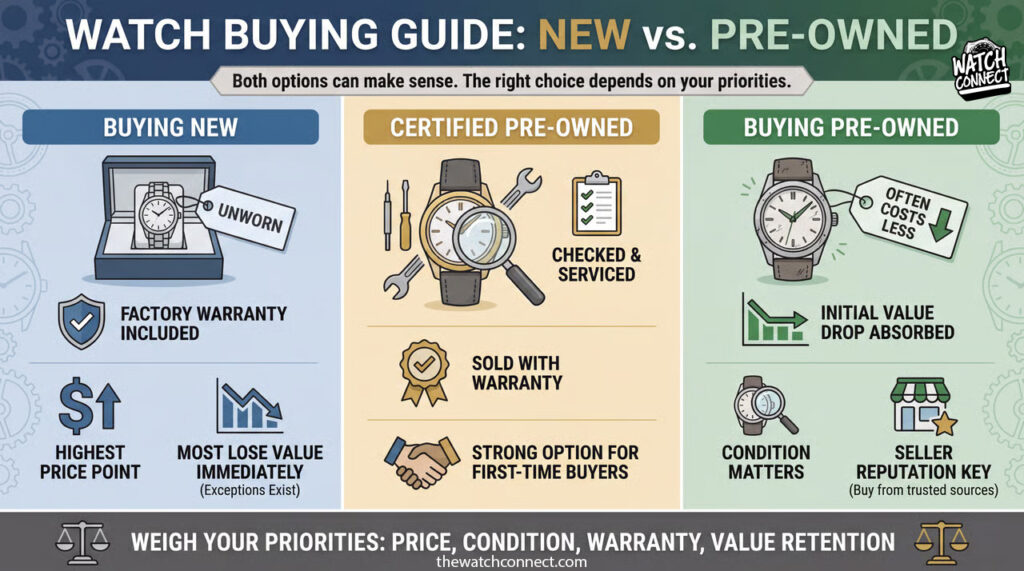
Both options can make sense. The right choice depends on your priorities.
Buying New
Buying new means the watch is unworn and comes with a factory warranty. You also pay the highest price.
Most new watches lose value as soon as they are purchased, with some exceptions.
Buying Pre-Owned
Pre-owned watches often cost less and may already have absorbed their initial drop in value.
Condition and seller reputation matter more here. Buy from someone who stands behind what they sell.
Certified Pre-Owned
Certified pre-owned watches are checked, serviced, and sold with a warranty. This is a strong option for first-time buyers.
Where to Buy a Luxury Watch Safely
Authorized Dealers
Authorized dealers sell new watches with full brand support. Popular models can be difficult to get, but the buying experience is straightforward.
Trusted Pre-Owned Dealers
Good pre-owned dealers authenticate watches and offer warranties. This is often the best balance of value and security.
Online Marketplaces
Online marketplaces vary widely. Some are reliable, others are not. Always verify sellers and use independent authentication.
Private Sellers
Private sellers can offer good prices but come with higher risk. This route is better for experienced buyers.
Avoiding Fakes and Modified Watches
Counterfeit and modified watches are common in the secondary market.
Protect yourself by:
-
Verifying serial numbers
-
Checking that all parts match the model
-
Asking for service history
-
Avoiding rushed transactions
If something feels off, trust that feeling and walk away.
Budgeting Beyond the Sticker Price
The purchase price is not the only cost of owning a luxury watch.
Service Costs
Most mechanical watches need service every 5 to 10 years. Costs depend on the brand and complexity.
Insurance
If the watch is valuable, insurance is worth considering.
Storage
A safe or secure storage option protects the watch when it is not being worn.
Brands Worth Knowing
Even though you do not need to know every brand, here are a few names come up often.
-
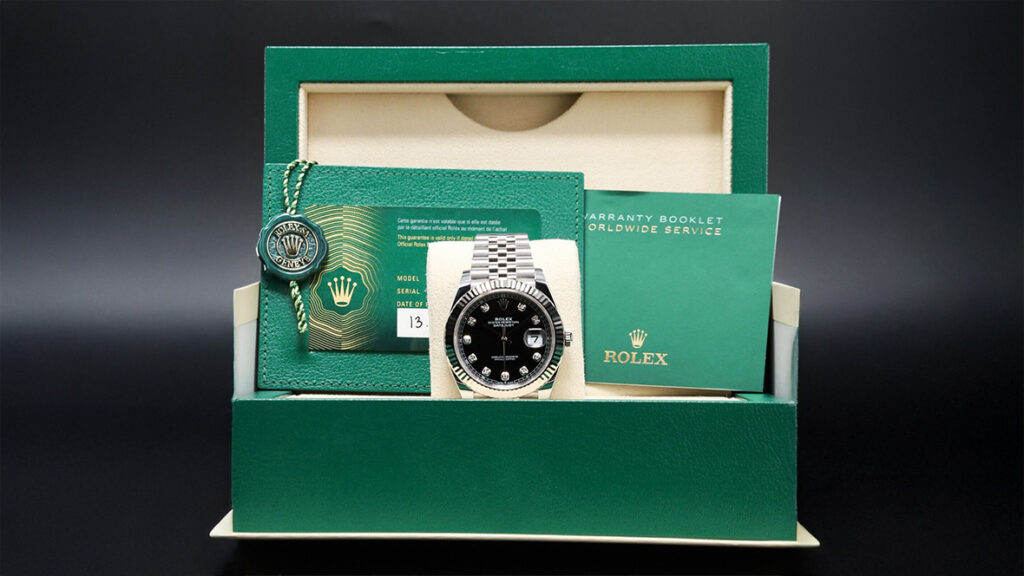
Rolex is known for durability and strong resale
-
Patek Philippe is known for complex watches and long history
-
Audemars Piguet stands out for bold design
-
Omega focuses on technical performance
-
Cartier is known for iconic shapes
-
Vacheron Constantin represents traditional watchmaking
Each brand has its own strengths. None are automatically the right choice for everyone.
Watches Almost Everyone Recognizes
Some models are widely known, even outside watch circles.
-
Rolex Submariner
-
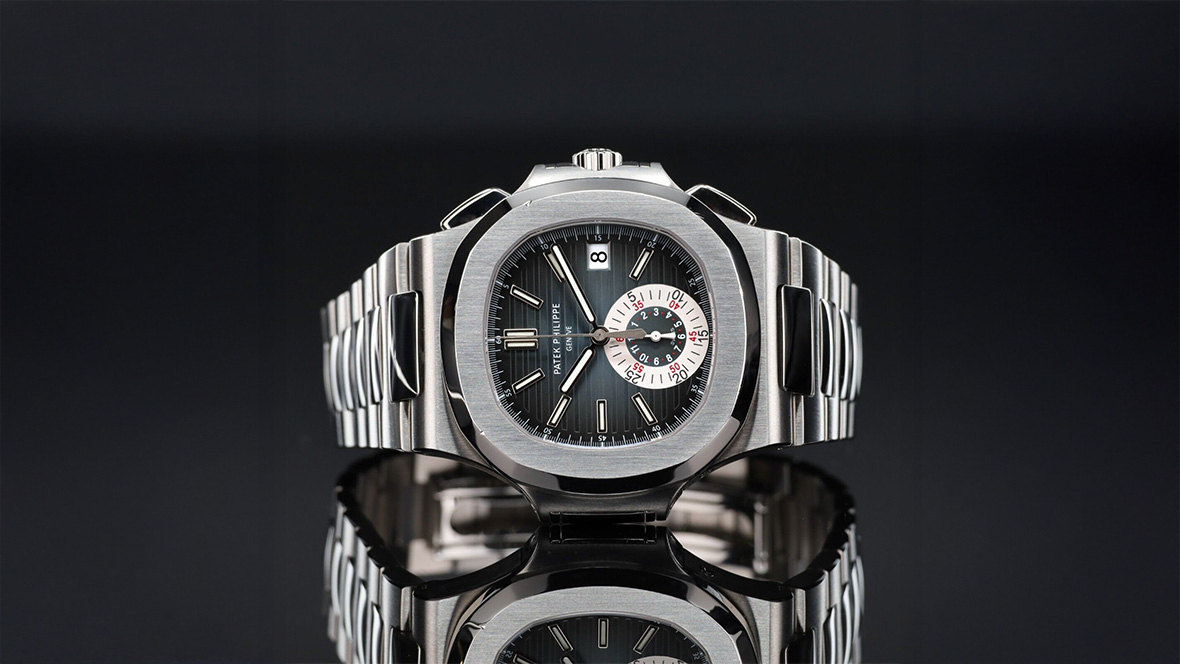
Patek Philippe Nautilus
-
Audemars Piguet Royal Oak
-
Omega Speedmaster
-
Cartier Tank
These watches are popular because they work well and have proven designs.
Buying a Luxury Watch With Authorized Dealers
Building a relationship with an authorized dealer can help if you want in-demand models.
What helps:
-
Being clear and respectful
-
Making repeat purchases
-
Being patient
There is no guaranteed formula.
Service and Long-Term Ownership
Regular service keeps a watch running well and protects its condition. Skipping service can lead to larger problems later.
If you plan to keep the watch long term, factor this into your decision.
Common First-Time Buyer Mistakes
Some mistakes come up again and again:
-
Buying based on hype
-
Ignoring fit and comfort
-
Choosing the lowest price without checking the seller
-
Expecting guaranteed value increases
Avoiding these mistakes is often more important than choosing the “right” model.
Is Buying a Luxury Watch a Good Investment?
A few watches perform well financially. Most should be bought to wear and enjoy.
If a watch increases in value, that is a bonus. It should not be the main reason you buy it.
Final Checklist Before You Buy
Before you commit, make sure:
-
The budget feels comfortable
-
The seller is trustworthy
-
The watch fits well
-
Authenticity is confirmed
-
Service costs make sense
If all five boxes are checked, you are likely making a solid choice.
Final Thoughts
Buying a luxury watch should feel exciting, not stressful. Take your time. Ask questions. Buy something that fits your life and your taste.
Read More: